Hard to visualize
Static photos don't show how a piece fits a specific room, size, or style.
We built an AI-powered platform that converts vendors' 360° furniture videos into 3D models, then lets shoppers upload a photo of their room and realistically place and preview furniture in their actual space.
Furniture shoppers struggle to imagine how a product will look and fit in their real living space. That uncertainty lowers purchase confidence — and drives returns when the reality doesn't match expectation.
Static photos don't show how a piece fits a specific room, size, or style.
Uncertainty makes shoppers hesitate or abandon the purchase.
When furniture doesn't fit the space, returns are expensive and frustrating.
Vendors had rich product footage but no way to turn it into something interactive.
The platform bridges vendors and shoppers: vendors upload 360° furniture videos that become 3D models, and shoppers upload room photos to place that furniture realistically within their own space.
Vendor-uploaded 360° product videos are processed into accurate 3D furniture models.
The system analyzes a shopper's uploaded room photo to understand the space.
Shoppers position and preview furniture in their room with realistic scale and perspective.
A streamlined flow for vendors to turn existing product footage into interactive 3D assets.
Real screens from the shipped product — from the AI dashboard and the live design studio to the furniture library and budget planner.
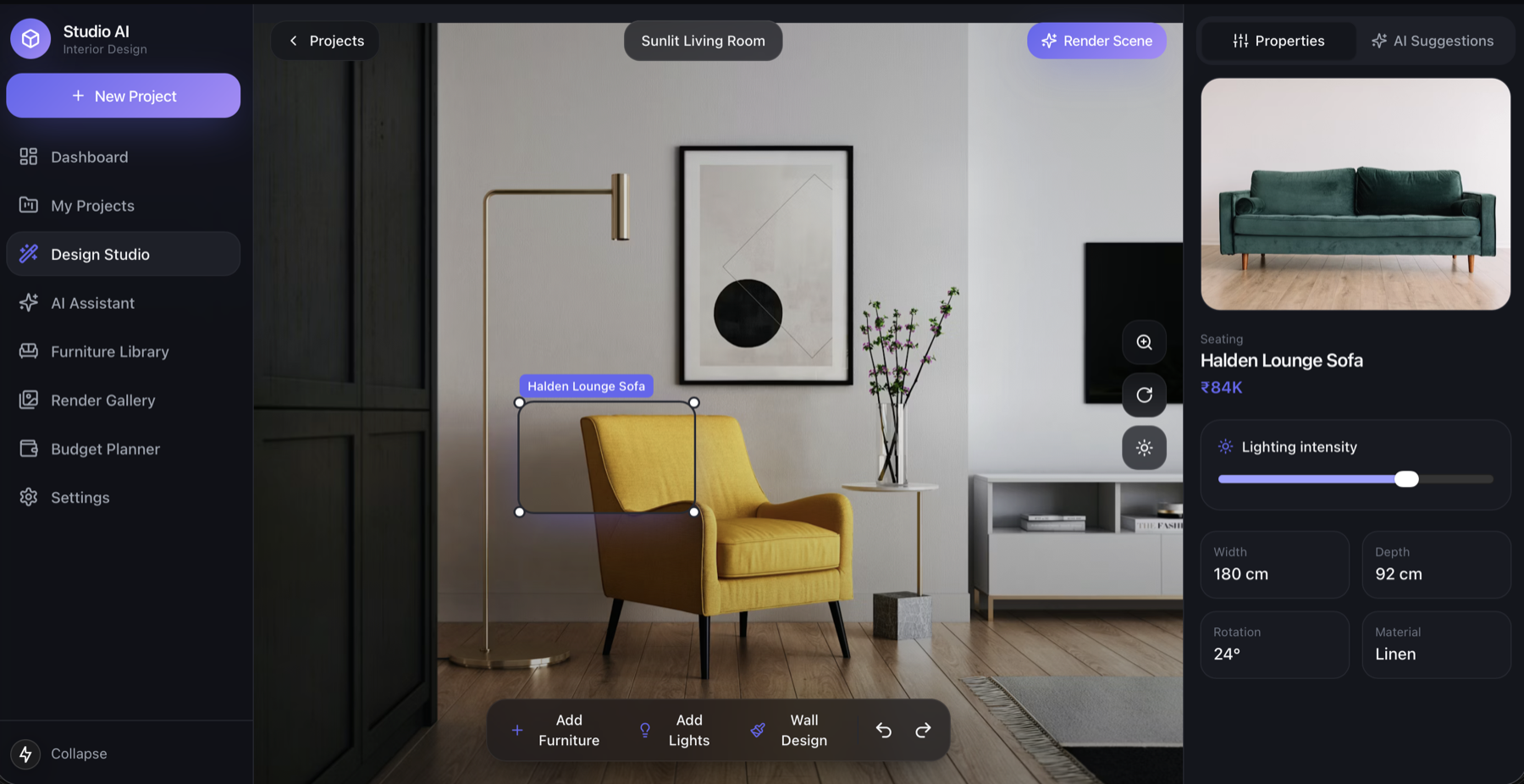
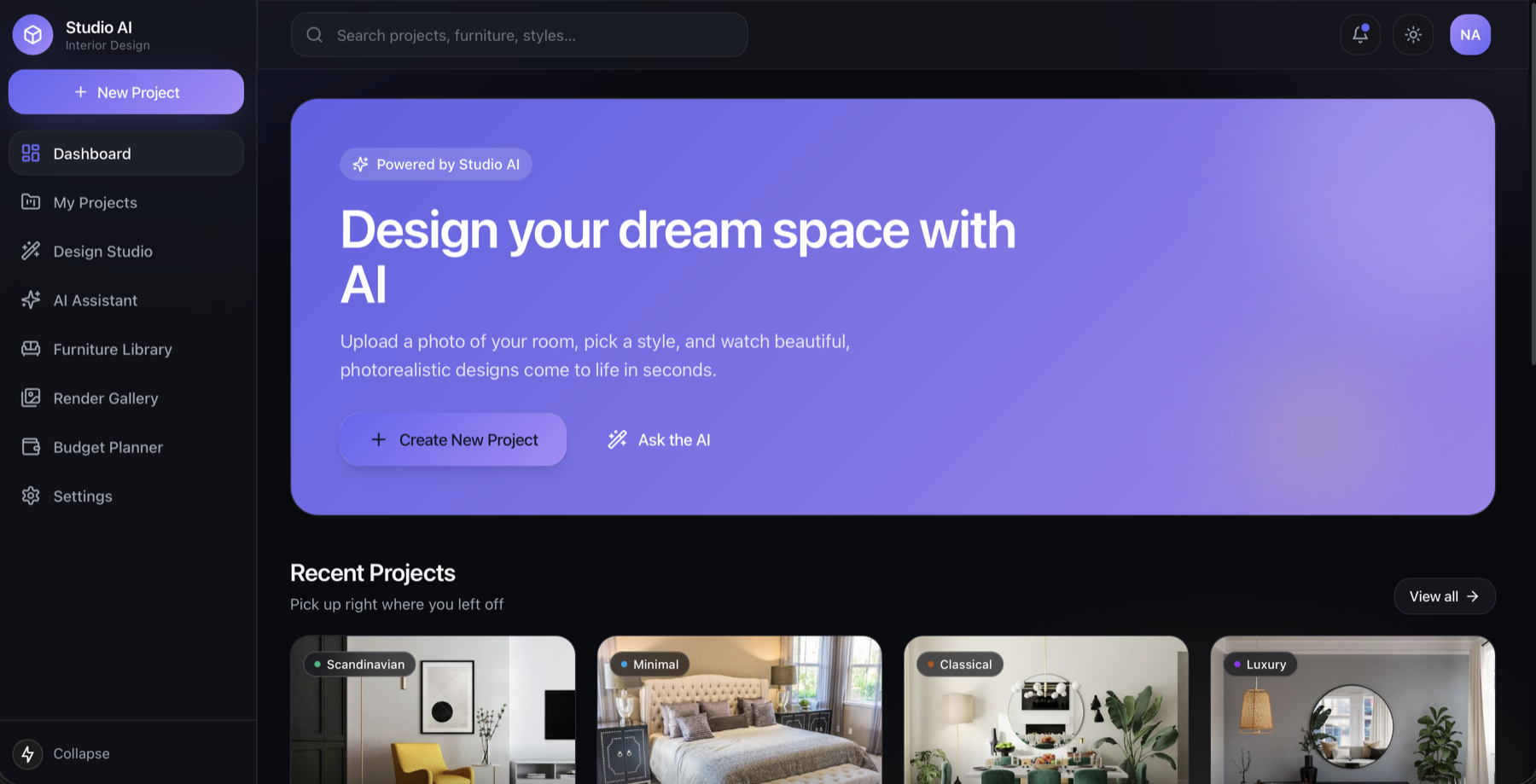
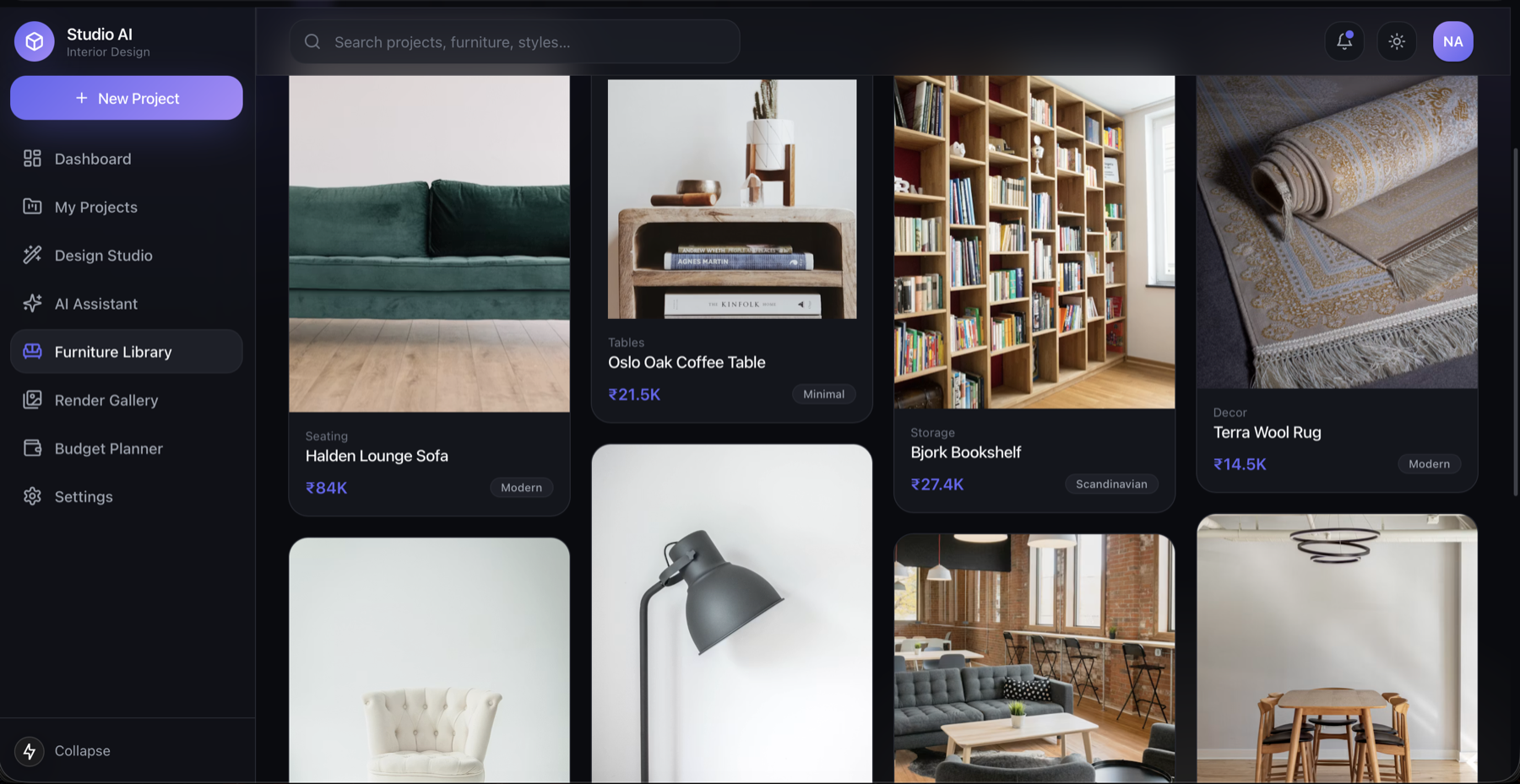
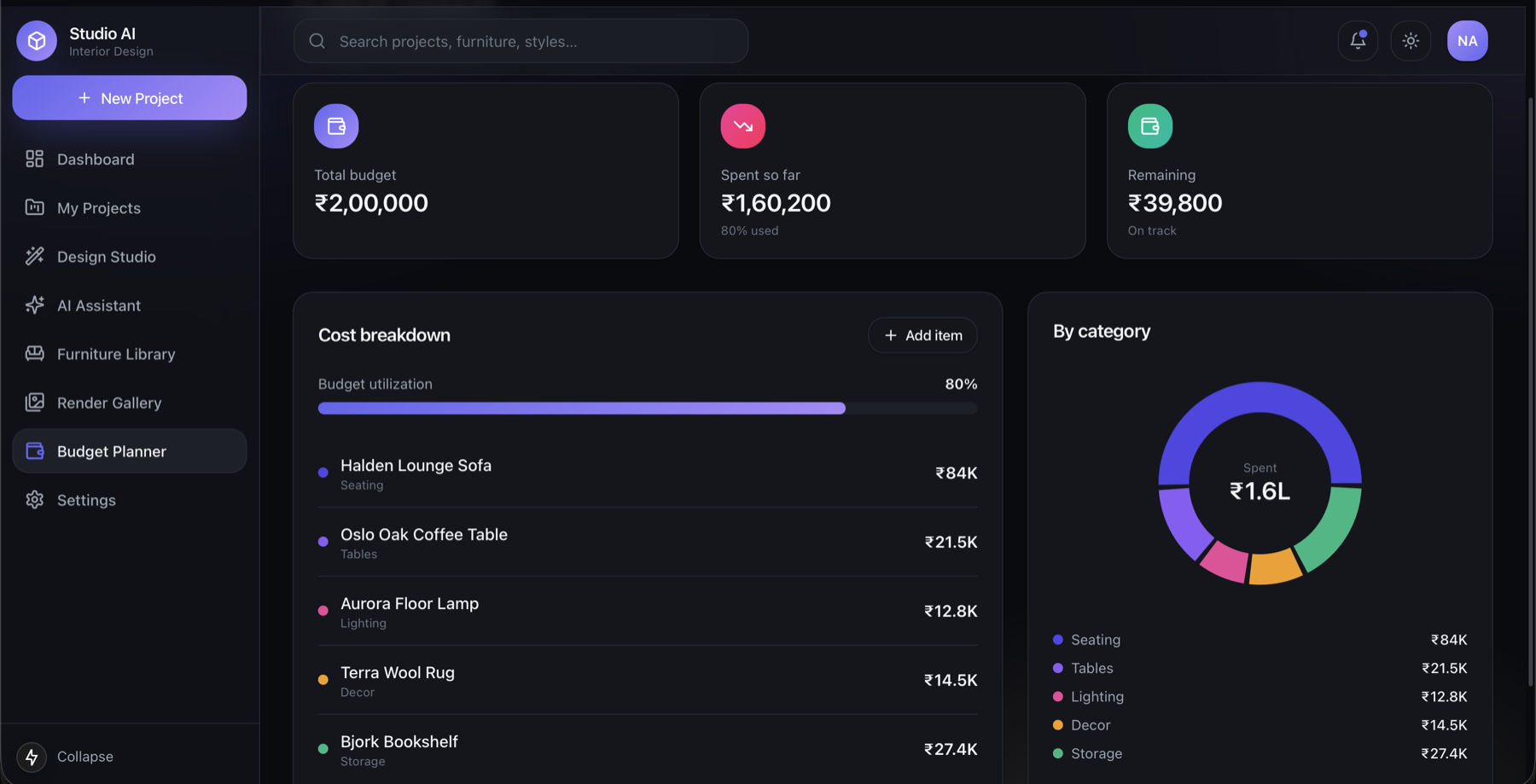
The platform combines computer-vision and 3D-processing pipelines on the backend with an interactive React experience on the front end.
Computer-vision models analyze the shopper's room photo to establish space, scale, and perspective for realistic placement.
A 3D-processing pipeline converts 360° vendor videos into usable furniture models that can be placed in a scene.
A Python backend orchestrates the vision and 3D pipelines and serves results to the application.
A React and Node application lets shoppers upload rooms, place furniture, and preview the result in an intuitive interface, on cloud infrastructure.
A clear, staged engineering process that keeps the client involved and validates each decision before moving forward.
Defined the two-sided flow — vendors creating 3D assets and shoppers visualizing them in their rooms.
Designed the computer-vision and 3D-processing pipelines and the interactive front end.
Developed the video-to-3D conversion, room analysis, and placement experience.
Delivered an interactive platform that makes furniture shopping more confident and engaging.
The platform improved customer confidence during furniture selection and enabled a more interactive, immersive digital shopping experience.
Shoppers see furniture in their own space before committing.
Visualization turns passive browsing into active, engaged shopping.
Existing 360° footage becomes interactive 3D assets.
From product thinking to backend, AI, and infrastructure, Zeone brings the full range of engineering disciplines together in one senior team — so complex, multi-part systems are built coherently, not stitched together.
One team owns every layer — product, engineering, and delivery — with no handoffs or gaps.
Every technical decision connects back to real user value and business outcomes.
Built for reliability, security, and scale from day one — not bolted on later.
We build with the mindset of a partner invested in the product's success.
Whether it's an AI product, a platform build, or a complex engineering challenge — bring us the problem and we'll shape the path forward.